8. Lodge — PFAS-FREE
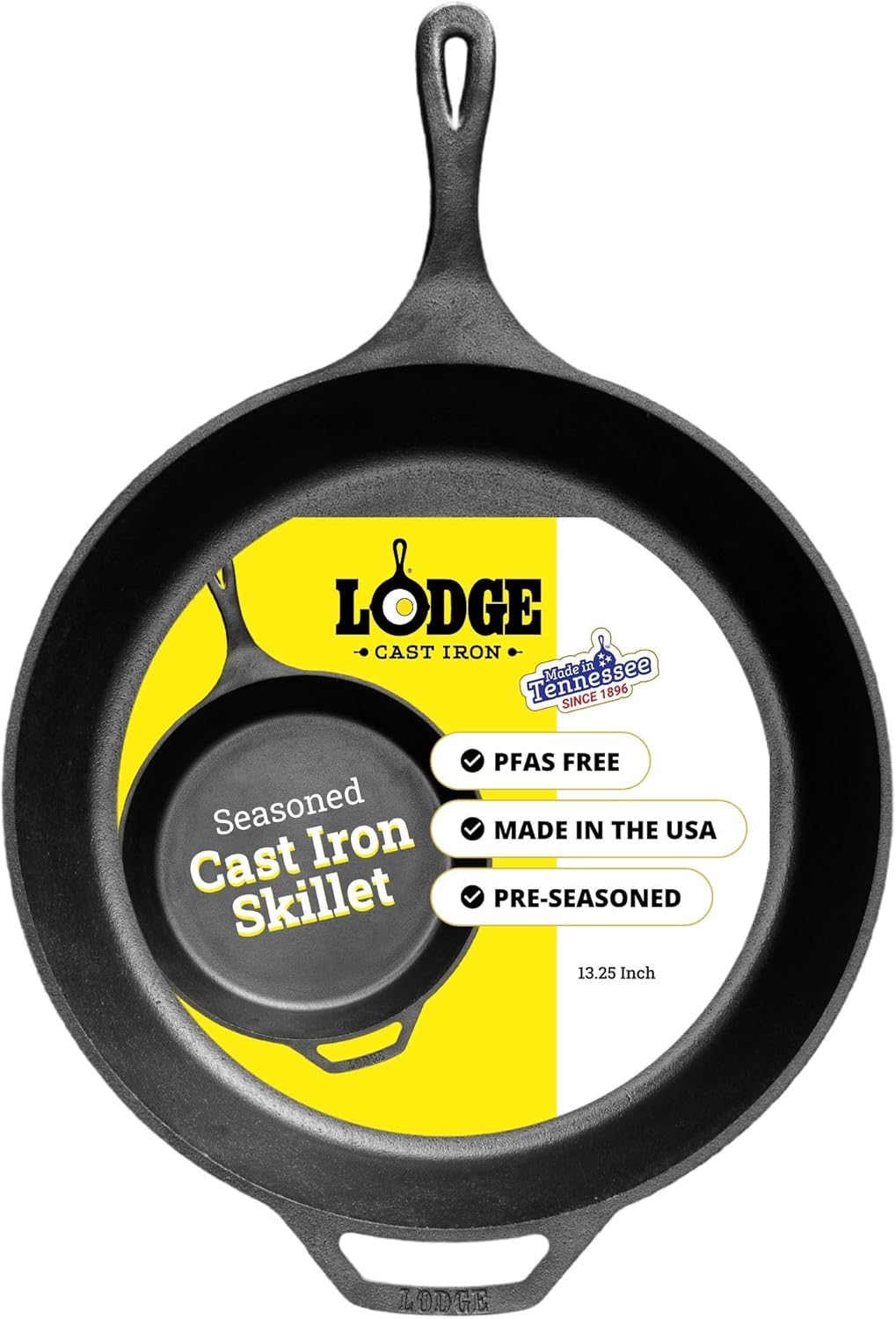
PFAS Status: No PFAS — no synthetic coatings of any kind.
Coating: None (bare cast iron or pre-seasoned with soybean oil)
South Pittsburg, Tennessee. Since 1896. Zero synthetic coatings, zero PFAS, zero arguments. The “nonstick” on a Lodge skillet comes from seasoning: polymerized cooking oil baked onto iron. At $15-45, these might be the best value in PFAS-free cookware on the market.
But there are some downsides. Cast iron is heavy. You’ll need to wash by hand and re-season it now and then. Acidic foods like tomato sauce can react with it. Lodge makes enameled cast iron too—way cheaper than Le Creuset—and that takes care of the acid problem. Best for: Budget-conscious buyers and anyone serious about chemical-free cooking.
9. Le Creuset — PFAS-FREE
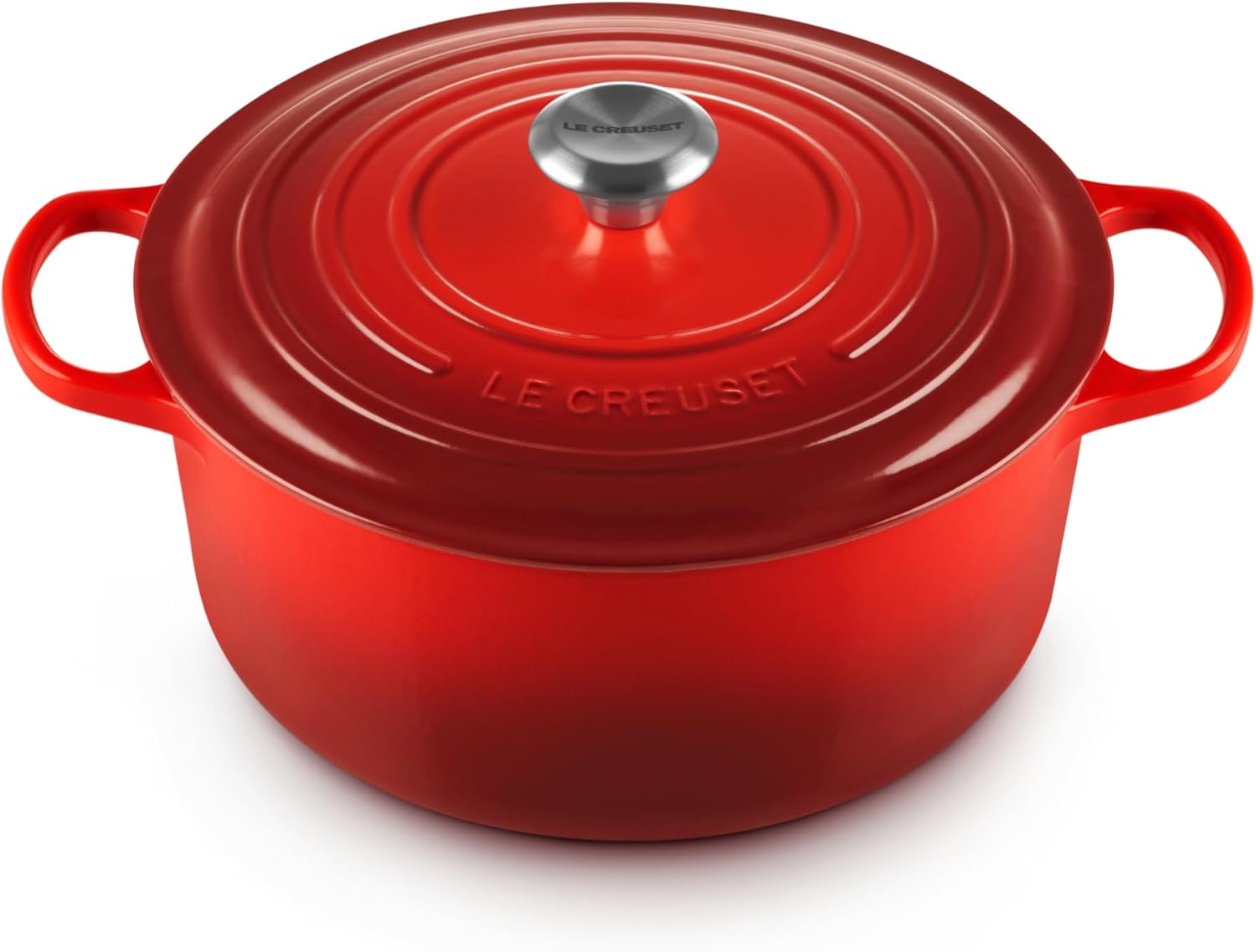
PFAS Status: No PFAS — enameled cast iron and stoneware only.
Coating: Porcelain enamel (glass-based)
Every single product Le Creuset makes contains zero PFAS. Cast iron, stoneware, all of it. This French company’s been making enameled cast iron since 1925 and has never gotten into the PTFE-coated cookware business. Their enamel is powdered porcelain melted onto cast iron at very high heat, which makes a surface that won’t react with food.
Expect to spend $200-400 or more for a quality Dutch oven. You’re buying handcrafted quality that comes with a lifetime warranty. The enamel is less slippery than PTFE or ceramic coatings, but proper preheating and oil produce very good food release. Best for: Braising, soups, baking, and a PFAS-free kitchen built to last generations.
10. Scanpan — CONTAINS PFAS
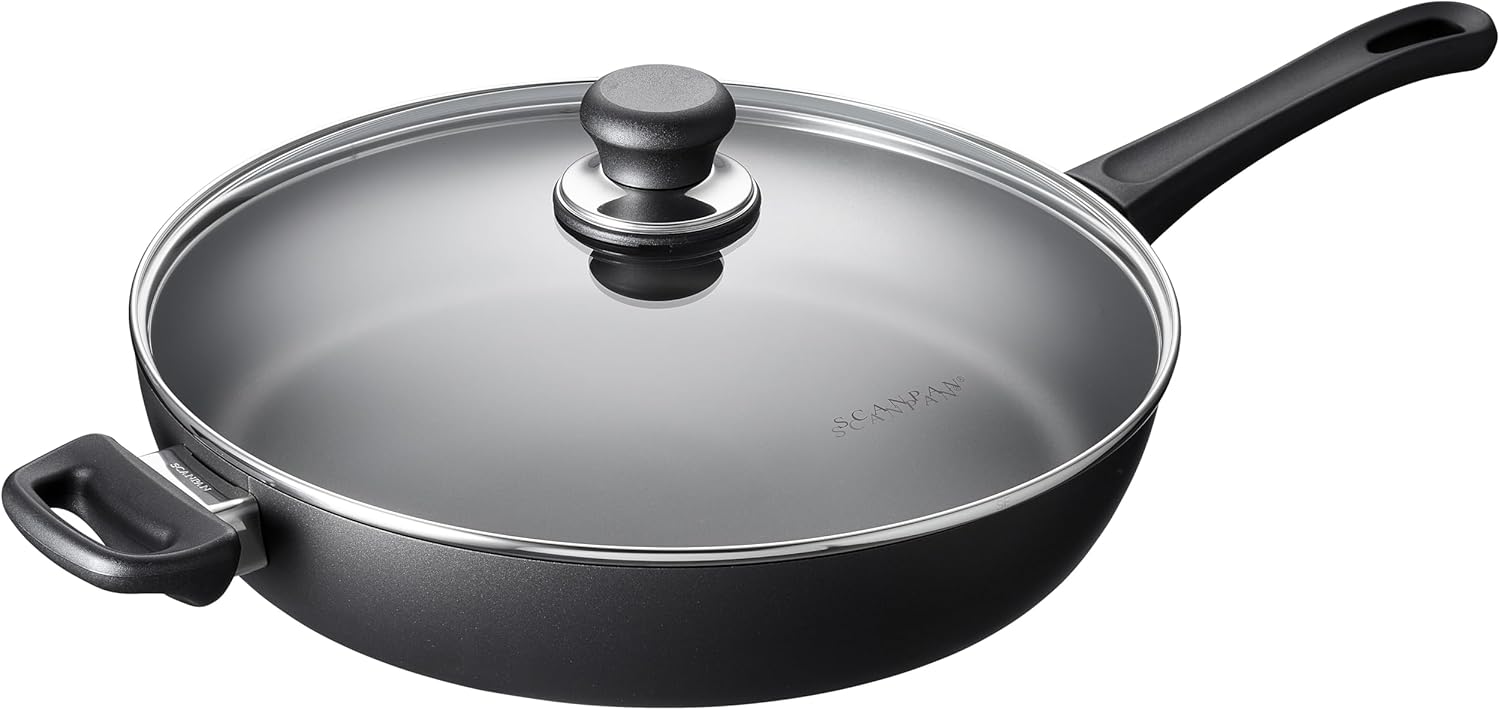
PFAS Status: Yes — uses PTFE in most lines.
Coating: PTFE-based nonstick (marketed as “Green Tek” and “Stratanium”)
Scanpan deserves special attention for its marketing language. This Danish brand labels its coatings “PFOA-free” and “Green Tek.” Sounds clean. It’s not. The Classic, Pro IQ, and CTX lines all contain PTFE. Scanpan’s own FAQ confirms it.
Their process embeds PTFE into a ceramic-titanium matrix, making the coating more durable than standard PTFE. That durability doesn’t eliminate the PFAS content. The sole exception is the “Impact” line, which uses actual ceramic nonstick and is PTFE-free. Safe alternative: Scanpan Impact (ceramic) line only, or switch to GreenPan.
If you have experienced health issues linked to PFAS exposure, consulting a qualified attorney is a recommended first step. Most PFAS attorneys operate on a contingency basis.
11. Cuisinart — CONTAINS PFAS (Most Nonstick Lines)
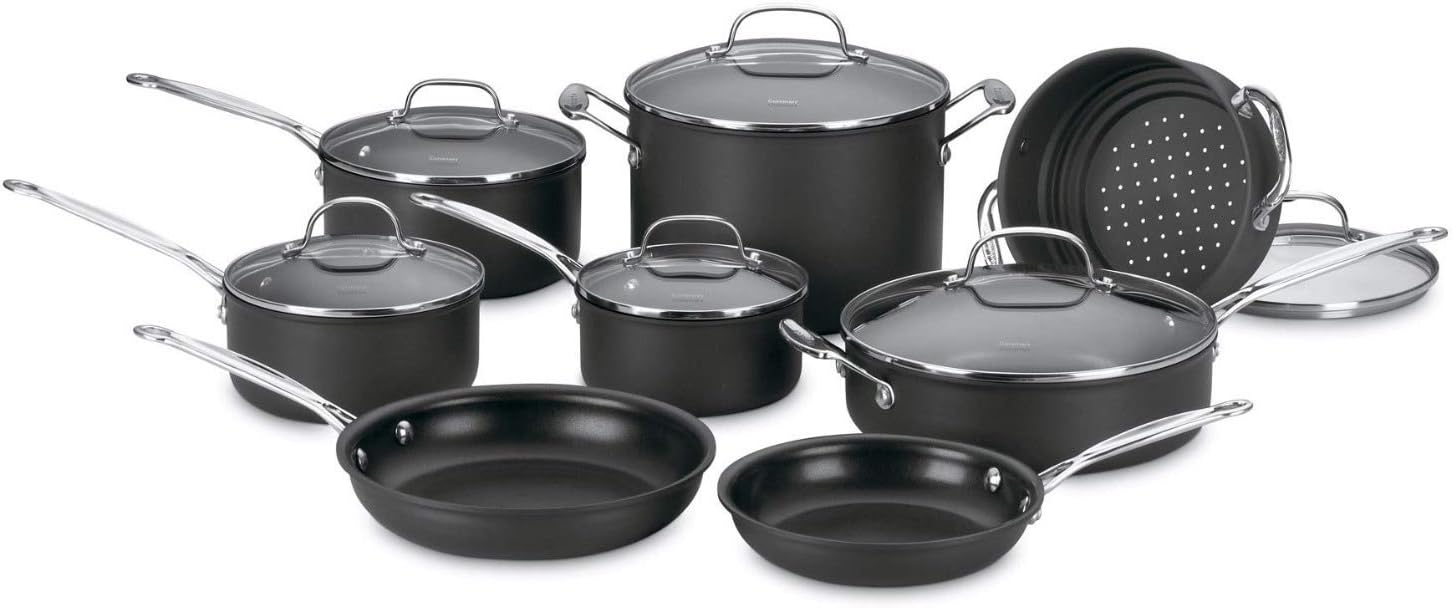
PFAS Status: Yes — most nonstick lines use PTFE. Stainless lines are PFAS-free.
Coating: PTFE-based (nonstick lines) or none (stainless steel lines)
The worst offender here might be the “GreenGourmet” line. Despite the eco-friendly branding, Cuisinart has confirmed that its Ceramica XT coating contains PTFE. Same goes for the Chef’s Classic Nonstick line. Cuisinart, owned by Conair Corporation, trades on green-sounding names while selling fluoropolymer-coated pans. Misleading? You decide.
Good news: MultiClad Pro and French Classic stainless steel lines are entirely PFAS-free, cost less than All-Clad, and review well. When shopping Cuisinart, read the product specs carefully. “Nonstick” in the name almost always means PTFE. Safe alternative: Cuisinart MultiClad Pro Stainless Steel.