
The Widespread Use and Worries About PFAS Testing Kits Today
Per- and poly-fluoroalkyl substances, commonly known as PFAS, have seamlessly integrated themselves into modern life. These versatile chemicals have infiltrated various sectors, from non-stick cookware in the kitchen to waterproof apparel in fashion. Their exceptional resistance to heat, water, and oil makes them invaluable. However, concerns about PFAS persist in our ecosystems and potential health risks, raising alarms about their impact on humans and the environment. In response, the emergence of PFAS Testing Kits proved to be a vital breakthrough. These kits are crucial tools, for proactively assessing and addressing compound prevalence in our surroundings.
Understanding PFAS Contamination
What are PFAS?
Per- and polyfluoroalkyl substances, or PFAS, are a group of synthetic chemicals crafted for exceptional properties. These remarkable compounds possess the exceptional ability to repel both water and oil, rendering them highly prized in a multitude of applications. These apps range from being part of different manufacturing steps to being included in all sorts of products people buy.
Sources of PFAS Contamination
PFAS permeate the environment through multifarious channels. Industrial discharges, firefighting foam use, and improper waste disposal release PFAS into soil and water. Once introduced, PFAS persist for extended periods, resisting natural decomposition. Even after a long time, these substances keep their shape really well. This makes it hard to deal with them and understand how they might harm nature or our health.
Health and Environmental Concerns
Based on scientific findings, PFAS chemicals pose significant health risks. They can harm our liver, disrupt our immune system’s defences, and impact thyroid function. Additionally, these substances have been connected to a higher chance of getting specific types of cancer.
Importantly, PFAS doesn’t solely affect individuals; moreover, its impact extends to the environment. These chemicals exert adverse effects on the Earth, as the contamination reaches water and soil, posing harm to these ecosystems. This disruption further upsets the natural equilibrium, leading to detrimental consequences for plants and animals alike. Moreover, the repercussions extend to aquatic life forms, as PFAS contamination can induce adverse effects on the well-being of aquatic organisms, potentially jeopardizing entire ecosystems.

Importance of PFAS Testing
Monitoring Drinking Water
Clean drinking water is super important for our health. In this context, the criticality of PFAS testing cannot be overstated. These tests play a pivotal role in identifying contamination within water sources, consequently guaranteeing that the water we consume remains untainted by the presence of hazardous levels of these potentially harmful compounds.
Assessing Soil and Sediment
Soil and sediment contamination carries profound ecological repercussions, giving rise to a host of challenges that span from diminished agricultural yield to the jeopardized equilibrium of aquatic ecosystems. In such scenarios, the deployment of PFAS testing kits emerges as an indispensable arsenal, playing a pivotal role in not only quantifying the extent of contamination but also expediting the development of precision-guided tactics engineered to rectify and restore the environmental balance through deliberate remedial interventions.

Testing Consumer Products
Given their exceptional water and grease resistance properties, PFAS have seamlessly infiltrated consumer products such as food packaging, textiles, and personal care items. The pervasive presence of these substances necessitates a meticulous evaluation of these products, serving a dual purpose that extends beyond mere scrutiny. This well-rounded strategy focuses on more than just finding out where people might come into contact with PFAS. What’s most important is keeping people safe and well. To do that, we really need to look closely at how PFAS mixes with the different things it’s in. This will help protect people from possible risks and give everyone a better understanding of how widespread and impactful PFAS really are. In essence, rigorous testing takes on a mantle of responsibility that transcends surface-level concerns, embracing the broader goal of creating environments that prioritize human health and safety.
Types of PFAS Testing Kits
Immunoassay-based Kits
Immunoassay-based kits are celebrated for their user-friendly nature, making them accessible even to those without extensive scientific backgrounds. These kits employ antibodies, which are the defenders of our immune system, to interact with PFAS molecules. As a result, a conspicuous colour transformation occurs, akin to a visual alarm, indicating the detection of PFAS in the sample under scrutiny. The swiftness of these kits in delivering results is indeed impressive, enabling timely decision-making. However, it’s important to note that while immunoassay-based kits excel in rapidity, they might exhibit limitations in their ability to detect extremely low levels of contamination. Their proficiency lies in swiftly flagging the presence of PFAS, but their sensitivity to minute concentrations could be a potential constraint.
Chromatography-based Kits
Chromatography-based kits demonstrate precision and finesse in PFAS analysis. By employing the principles of separation, these kits meticulously sort chemical constituents within a sample. This segregation consequently paves the way for pinpointing specific PFAS compounds, enabling their quantification with remarkable accuracy. Moreover, the analytical depth provided by chromatography-based kits makes them particularly suitable for situations where precision is paramount.
Sure, it’s good to point out that even though these kits work really well, you might need some know-how to get the most out of them. Operating chromatography-based kits proficiently demands a nuanced understanding of the chromatographic process and its intricacies.
Advanced Mass Spectrometry Kits
In the realm of PFAS analysis, advanced mass spectrometry kits stand as the pinnacle of detection precision. These kits tap into the powerful features of mass spectrometry—a tool so sensitive it can detect the tiniest bits of chemical substances. Furthermore, advanced mass spectrometry, akin to a molecular detective, scrutinizes the sample at a molecular level, identifying and quantifying PFAS compounds with unparalleled sensitivity. However, the operational demands of these kits are substantial. Their intricate methodology necessitates a level of expertise often found within professional laboratory settings. Thus, while advanced mass spectrometry kits elevate detection to unprecedented levels, their utilization tends to be confined to the domain of experienced professionals adept in the nuances of analytical instrumentation.
FAQs about PFAS Testing Kits
Got questions about Hard Water Test Kits? Let’s clear things up!
How Do PFAS Testing Kits Work?
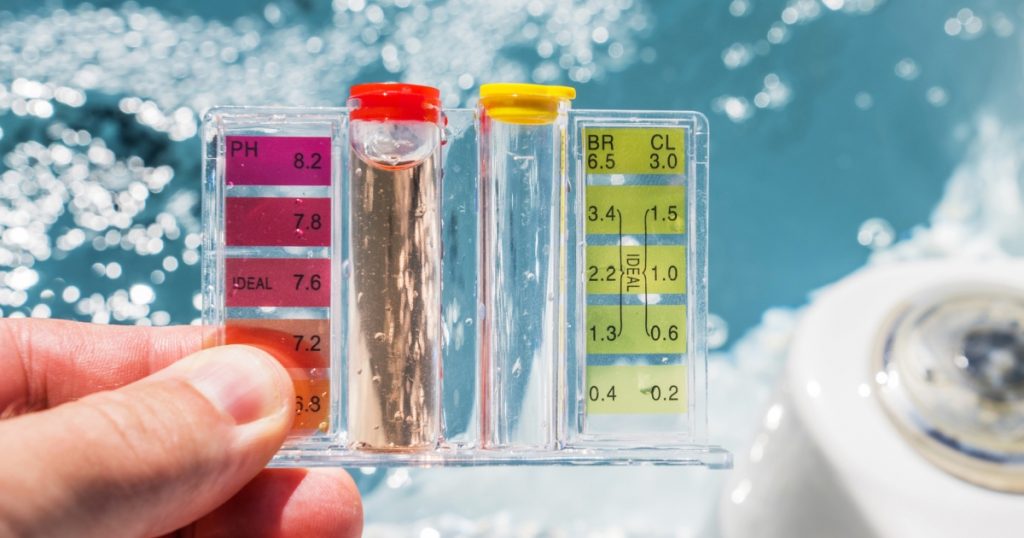
PFAS testing kits encompass reagents that react with PFAS molecules, inducing observable changes such as alterations in colouration. These changes serve as indicators of PFAS presence and concentration within a given sample.
Are PFAS Testing Kits User-Friendly?
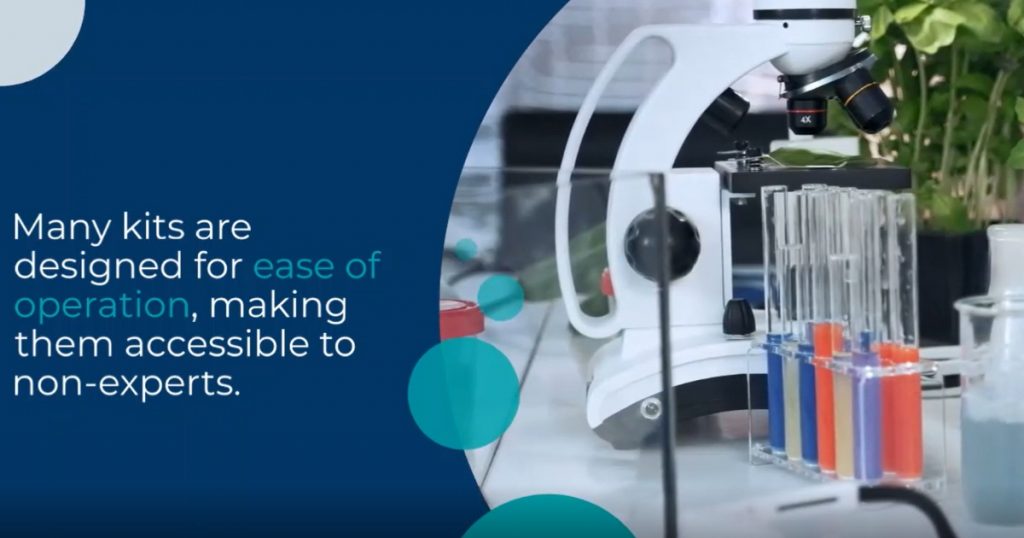
Indeed, a considerable number of PFAS testing kits have been architected for ease of operation. Certain kits are designed to be comprehensible even to non-experts, democratizing access to vital testing methods for individuals and communities concerned about contamination.
What Should I Do If My Test Results Are Positive?
In such cases, a measured response is crucial upon receiving PFAS-positive test results. It’s advisable to consult local environmental authorities or experts for guidance. They can provide insights on the appropriate next steps, which may involve further testing, mitigation efforts, or risk abatement measures.
Choosing the Right PFAS Testing Kit
Consider the Testing Parameters
Choosing the right PFAS testing kit depends on the nature of the sample under examination—whether it’s water, soil, or a consumer product. Various kits are specifically designed to target these distinct matrices.
Sensitivity and Specificity
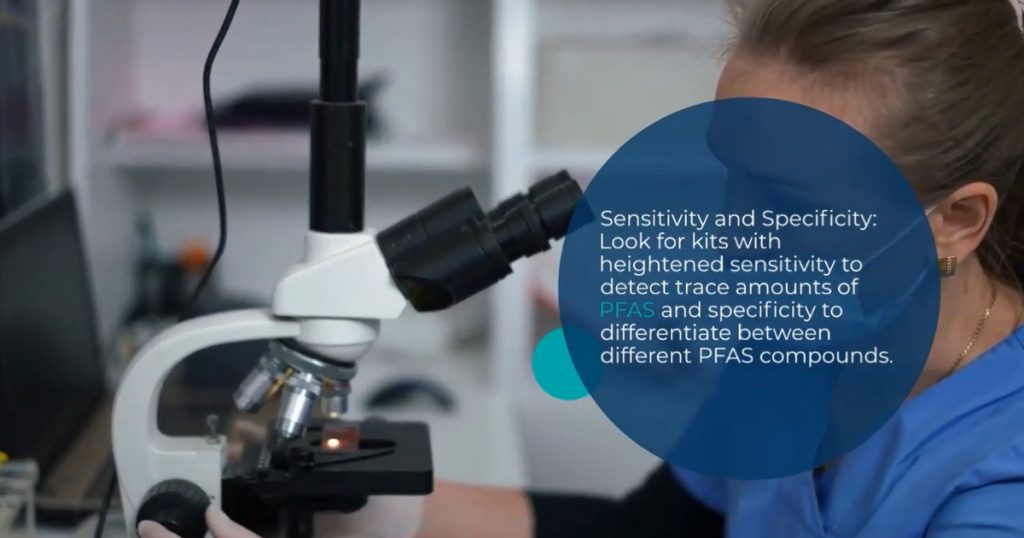
Consequently, kits characterized by heightened sensitivity excel at detecting even trace amounts of PFAS, thereby ensuring the veracity of results. In contrast, specificity refers to a kit’s capacity to differentiate between distinct PFAS compounds, minimizing the risk of false positives.
Validation and Certification
Opting for a PFAS testing kit that has received validation from regulatory bodies or independent entities is tantamount to securing reliable results. Specifically, certification serves as a testament to the kit’s adherence to established benchmarks for accuracy and performance.
 Screenshot from a video. The video is a slide show summary of the blog highlighting the importance, types, and impacts of PFAS testing kits. File is included in the shared zipped file.
Interpreting PFAS Test Results
Understanding Detection Limits
Each PFAS testing kit defines its lower limit of detection, indicating the minimum PFAS concentration it can reliably identify. Consequently, results that fall below this threshold might not be discerned by the test.
Comparing Results to Guidelines
By cross-referencing PFAS test results with established guidelines or regulatory standards, we can gauge the gravity of contamination. When results exceed these thresholds, it’s a clear indication for taking proactive measures to address the predicament.
Seeking Professional Assistance
Navigating PFAS test outcomes can be pretty baffling if you’re no expert. If you’re scratching your head, feel free to reach out to specialists or green organizations. They’ll guide you the right way.
Summary
As concerns over PFAS contamination keep rising, the need for testing kits to check for PFAS is more crucial than ever.
These kits empower regular folks, neighbourhood groups, and formal bodies with the means to figure out if there’s an issue and what steps to take to resolve it.
Knowing the basics of PFAS, picking the right test kits, and correctly reading the results are key steps to making our surroundings healthier and safer. It’s really important to know that good tests and smart choices are key to lessening the damage that PFAS can do, whether it’s close to home or across the globe.
[/tatsu_text][/tatsu_column][/tatsu_row][/tatsu_section] [tatsu_section bg_color= “” bg_image= “” bg_repeat= “no-repeat” bg_attachment= ‘{“d”:”scroll”}’ bg_position= ‘{“d”:”top left”}’ bg_size= ‘{“d”:”cover”}’ bg_animation= “none” padding= ‘{“d”:”15px 0px 15px 0px”}’ margin= ‘{“d”:”0px 0px 0px 0px”}’ bg_video_mp4_src= “” bg_video_ogg_src= “” bg_video_webm_src= “” overlay_color= “” overlay_blend_mode= “normal” section_height_type= “auto” custom_height= ‘{“d”:””}’ vertical_align= “center” top_divider= “none” top_divider_zindex= “9999” bottom_divider_zindex= “9999” bottom_divider= “none” top_divider_height= ‘{“d”:100}’ top_divider_position= “above” bottom_divider_height= ‘{“d”:100}’ bottom_divider_position= “below” top_divider_color= “#ffffff” bottom_divider_color= “#ffffff” invert_top_divider= “0” invert_bottom_divider= “0” flip_top_divider= “0” flip_bottom_divider= “0” section_id= “” section_class= “” section_title= “” offset_value= “0” full_screen_header_scheme= “background–dark” overflow= “” z_index= “0” hide_in= “” animate= “1” animation_type= “none” animation_delay= “0” animation_duration= “300” border_style= ‘{“d”:”solid”,”l”:”solid”,”t”:”solid”,”m”:”solid”}’ border= ‘{“d”:””}’ border_color= “” border_radius= “” box_shadow= “0px 0px 0px 0px rgba(0,0,0,0)” key= “hhgigqr82jdd47f2”][tatsu_row full_width= “0” bg_color= “” border_style= ‘{“d”:”solid”,”l”:”solid”,”t”:”solid”,”m”:”solid”}’ border= ‘{“d”:””}’ border_color= “” no_margin_bottom= “0” equal_height_columns= “0” gutter= “medium” column_spacing= “” fullscreen_cols= “0” swap_cols= “0” padding= ‘{“d”:”0px 0px 0px 0px”}’ margin= ‘{“d”:”0px 0px”}’ row_id= “” row_class= “” box_shadow= “0px 0px 0px 0px rgba(0,0,0,0)” border_radius= “0” hide_in= “” animate= “1” animation_type= “none” animation_delay= “0” animation_duration= “300” layout= “1/1” key= “hhgigqr83vs0ypz”][tatsu_column bg_color= “” bg_image= “” bg_repeat= “no-repeat” bg_attachment= “scroll” bg_position= ‘{“d”:”top left”}’ bg_size= ‘{“d”:”cover”}’ padding= ‘{“d”:”0px 0px 0px 0px”}’ margin= ‘{“d”:””}’ border_style= ‘{“d”:”solid”,”l”:”solid”,”t”:”solid”,”m”:”solid”}’ border= ‘{“d”:””}’ border_color= “” border_radius= “0” box_shadow_custom= “0px 0px 0px 0px rgba(0,0,0,0)” bg_video_mp4_src= “” bg_video_ogg_src= “” bg_video_webm_src= “” overlay_color= “” overlay_blend_mode= “normal” animate_overlay= “none” link_overlay= “” vertical_align= “none” sticky= “0” offset= ‘{“d”:”0px 0px”}’ column_parallax= “0” column_width= ‘{“d”:”100″}’ column_mobile_spacing= “0” image_hover_effect= “none” column_hover_effect= “none” hover_box_shadow= “0px 0px 0px 0px rgba(0,0,0,0)” overflow= “” col_id= “” column_class= “” top_divider= “none” top_divider_height= ‘{“d”:”100″,”m”:”0″}’ top_divider_color= “#ffffff” flip_top_divider= “0” top_divider_zindex= “9999” bottom_divider= “none” bottom_divider_height= ‘{“d”:”100″,”m”:”0″}’ bottom_divider_color= “#ffffff” flip_bottom_divider= “0” bottom_divider_zindex= “9999” left_divider= “none” left_divider_width= ‘{“d”:”50″,”m”:”0″}’ left_divider_color= “#ffffff” invert_left_divider= “0” left_divider_zindex= “9999” right_divider= “none” right_divider_width= ‘{“d”:”50″,”m”:”0″}’ right_divider_color= “#ffffff” invert_right_divider= “0” right_divider_zindex= “9999” z_index= “0” hide_in= “” animate= “1” animation_type= “none” animation_delay= “0” animation_duration= “300” layout= “1/1” key= “hhgigqr851aep8ng”][tatsu_text bg_color= “” color= “” max_width= ‘{“d”:”100″}’ wrap_alignment= “center” text_alignment= ‘{“d”:”left”}’ margin= ‘{“d”:”0px 0px 30px 0px”}’ box_shadow= “0px 0px 0px 0px rgba(0,0,0,0)” padding= ‘{“d”:”0px 0px 0px 0px”}’ border_style= ‘{“d”:”solid”,”l”:”solid”,”t”:”solid”,”m”:”solid”}’ border= ‘{“d”:”0px 0px 0px 0px”}’ border_color= “” border_radius= “0” text_typography= ‘{“d”:””}’ hide_in= “” css_id= “” css_classes= “” animate= “1” animation_type= “none” animation_delay= “0” animation_duration= “300” key= “hhgigqr862bkssqx”]Join the Conversation
Let’s chat about PFAS pollution—how to spot it and what it means for all of us. Your input and questions can not only enrich the discussion but also help us all become more informed on this critical issue. Have you got a personal experience with PFAS tests or are you concerned about dirty water? If so, go ahead and drop your thoughts in the comment section! The more we talk, the closer we all get. And that closeness helps us make a real impact.
Also, feel like lending a hand? If so, spread the word to your loved ones about PFAS testing kits. By doing so, you’re raising awareness and helping folks grasp why dealing with PFAS is a big deal.
[/tatsu_text][/tatsu_column][/tatsu_row][/tatsu_section]