3. Calphalon — CONTAINS PFAS (Most Lines)
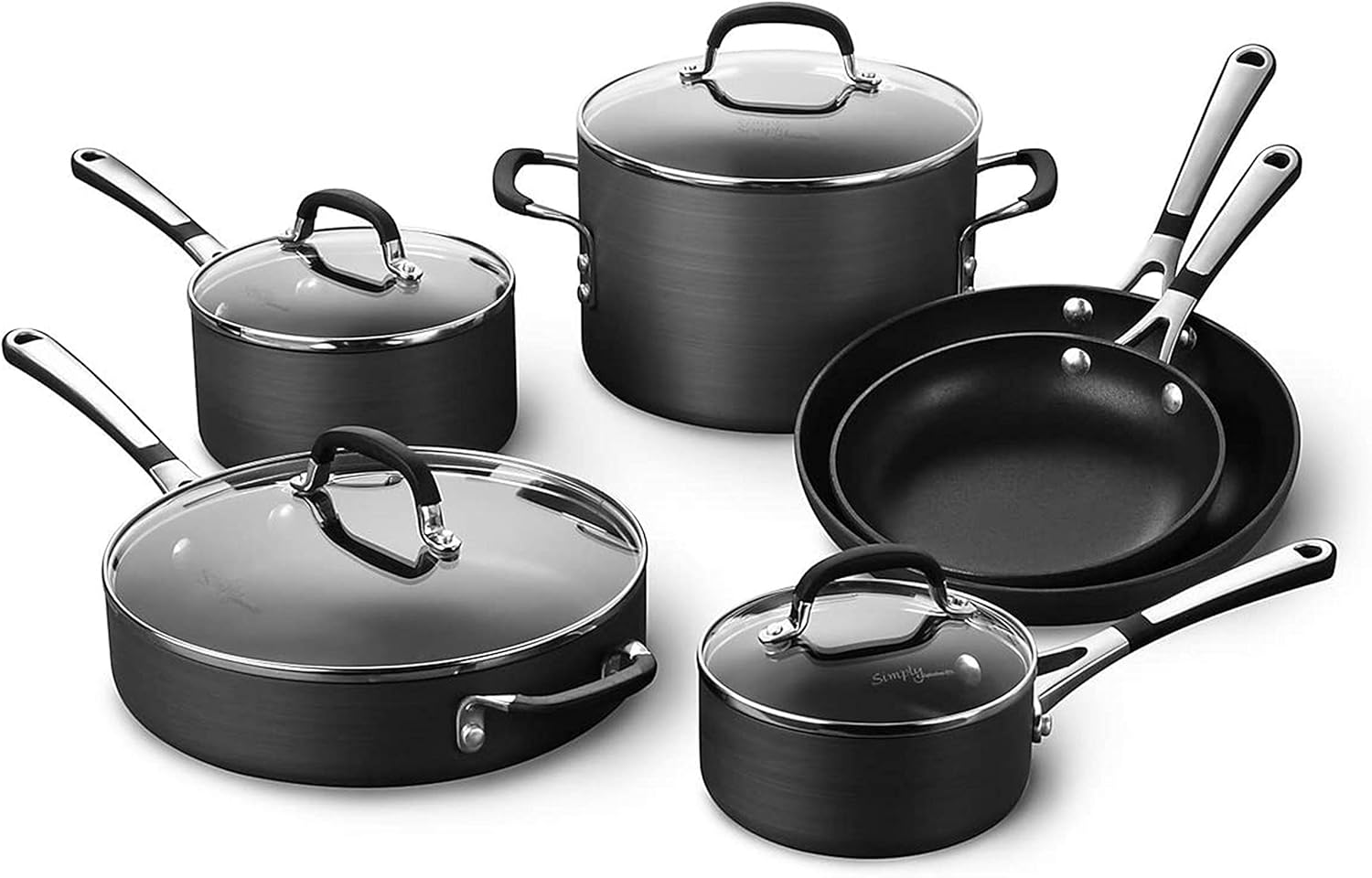
PFAS Status: Yes — most nonstick lines use PTFE.
Coating: PTFE-based nonstick; some uncoated stainless steel options
Already own Calphalon nonstick? Check the coating right now. If you see scratching, flaking, or discoloration, replace the pan. The Classic, Contemporary, and Premier nonstick lines all use PTFE, and all carry the misleading “PFOA-free” label.
Silver lining: Calphalon’s Tri-Ply Stainless Steel and Signature Stainless Steel lines contain zero PFAS. They’re well-reviewed and priced competitively. You don’t have to abandon the brand entirely. Safe alternative: Calphalon Tri-Ply Stainless Steel.
4. All-Clad — PFAS-FREE (Stainless Lines) / CONTAINS PFAS (Nonstick Lines)
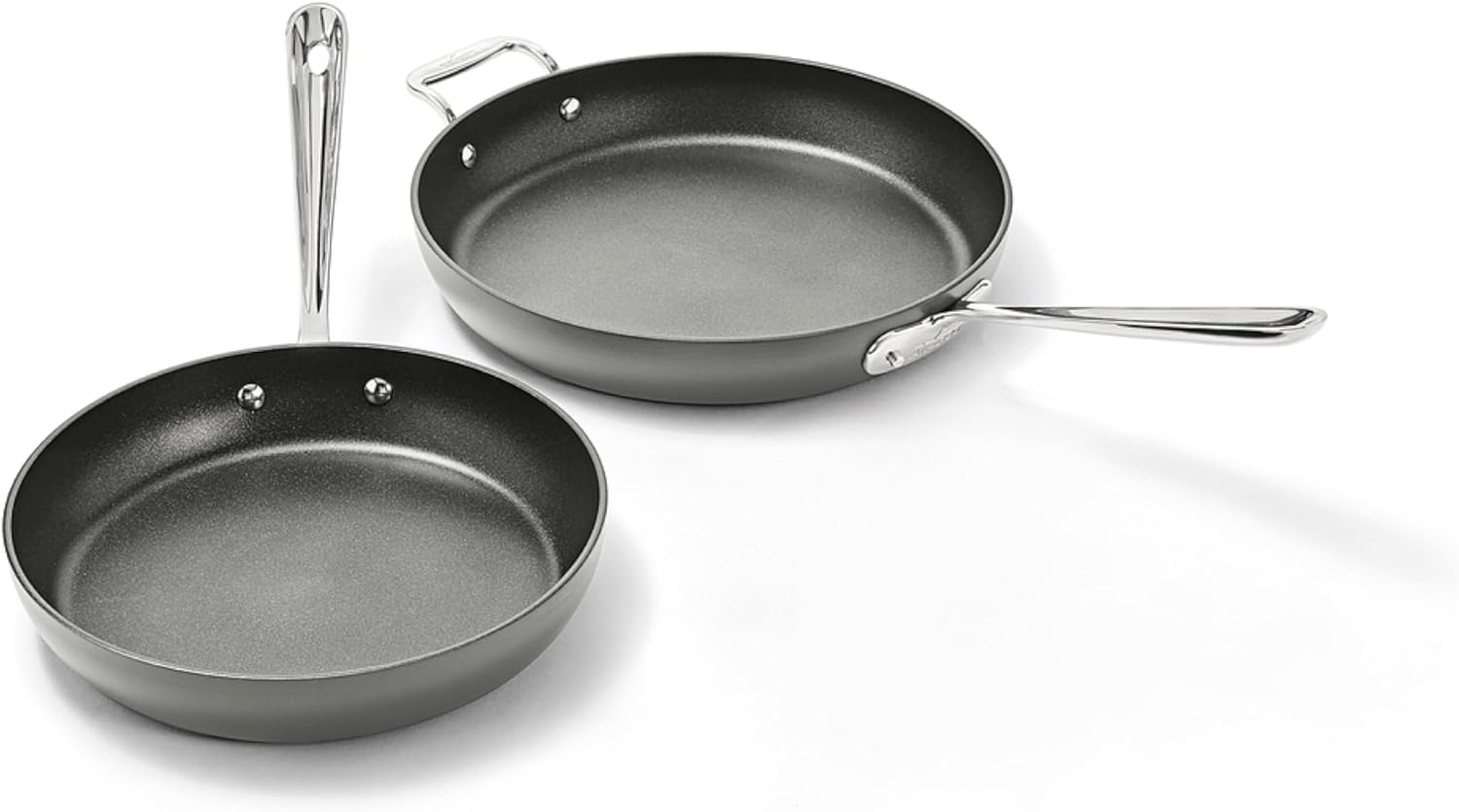
PFAS Status: Split — stainless lines are PFAS-free; nonstick lines use PTFE.
Coating: None (stainless) or PTFE-based (nonstick)
All-Clad, manufactured in Canonsburg, Pennsylvania and owned by Groupe SEB, built its reputation on premium stainless steel cookware. The D3, D5, and Copper Core lines use no coatings. They rank among the most respected cookware available. Completely PFAS-free.
Here’s the catch. All-Clad also sells nonstick lines (HA1, B1, NS1) with standard PTFE coatings. The $150-300 per-pan price reflects fully clad tri-ply or five-ply construction, not a safer coating. Safe alternative: Stick with All-Clad stainless steel and learn proper preheating technique for nonstick results.
5. GreenPan — PFAS-FREE
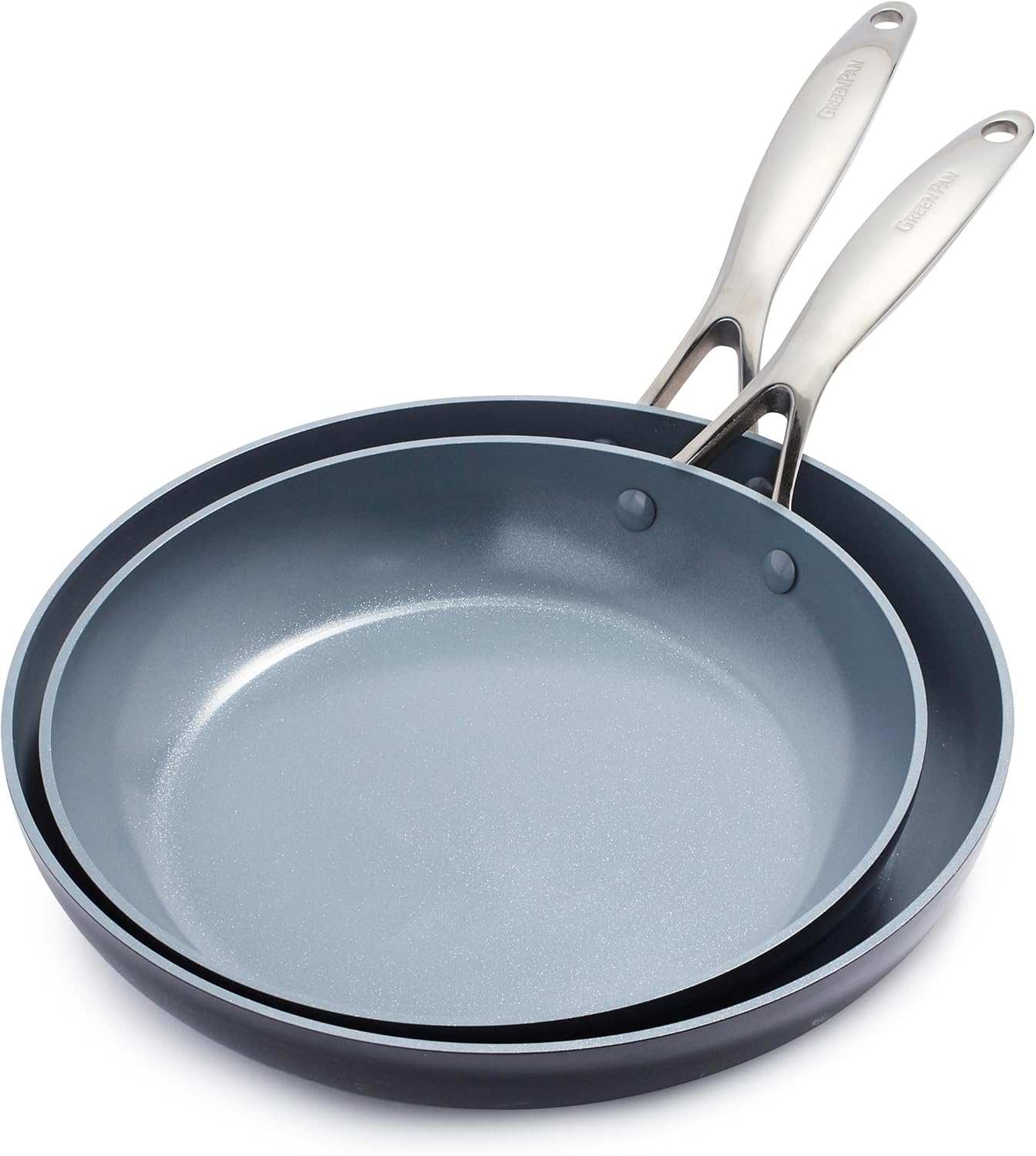
PFAS Status: No PFAS — certified PTFE-free and PFOA-free.
Coating: Thermolon ceramic nonstick coating
GreenPan pioneered ceramic nonstick when it launched in Belgium in 2007. The Thermolon coating derives from silicon dioxide and contains no PTFE, PFOA, PFOS, or any other PFAS compound. Independent third-party testing has verified these claims repeatedly.
The brand tiers its product lines: Valencia Pro for best performance, Paris Pro for mid-range, Rio for budget shoppers. One honest trade-off you should know about: ceramic nonstick loses its slipperiness faster than PTFE. Expect one to three years of peak performance versus three to five for PTFE. Even so, GreenPan remains our top pick for nonstick convenience without PFAS. Best pick: GreenPan Valencia Pro.
6. Caraway — PFAS-FREE
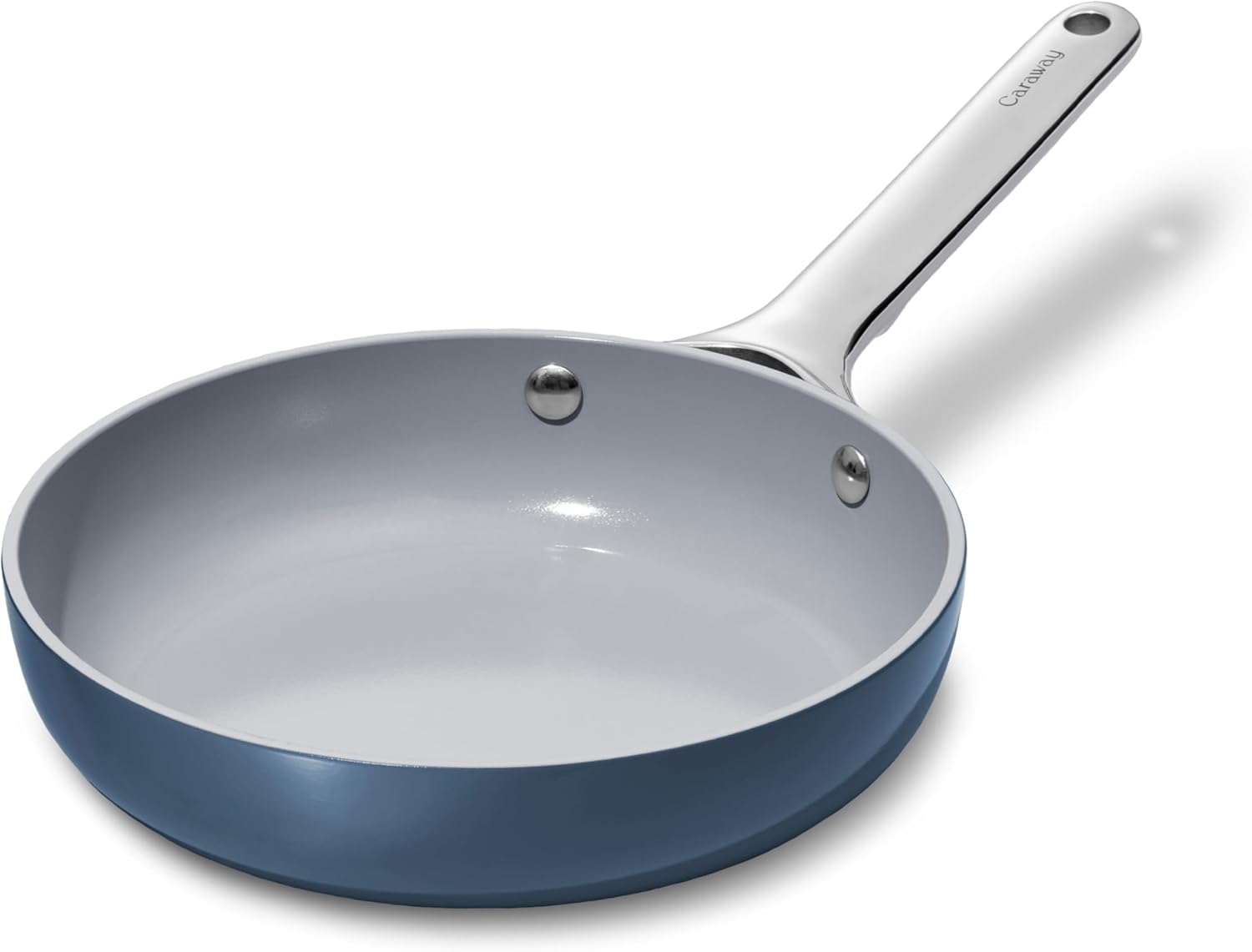
PFAS Status: No PFAS — ceramic-coated, independently tested.
Coating: Proprietary ceramic nonstick (mineral-based)
The brand that made PFAS-free cookware an Instagram moment. Caraway launched direct-to-consumer in 2019 and quickly built a following among younger buyers drawn to its design-forward aesthetic. Third-party lab testing verified the ceramic coating is free of PTFE, PFOA, PFOS, lead, and cadmium.
A four-piece set runs $395 and ships with magnetic pan racks and canvas lid holders. Like all ceramic nonstick, the coating degrades faster than PTFE under heavy use. Not cheap, but effective. Caraway has expanded into bakeware and food storage, all PFAS-free. Best for: A coordinated, PFAS-free kitchen set with modern design.
7. Our Place — PFAS-FREE
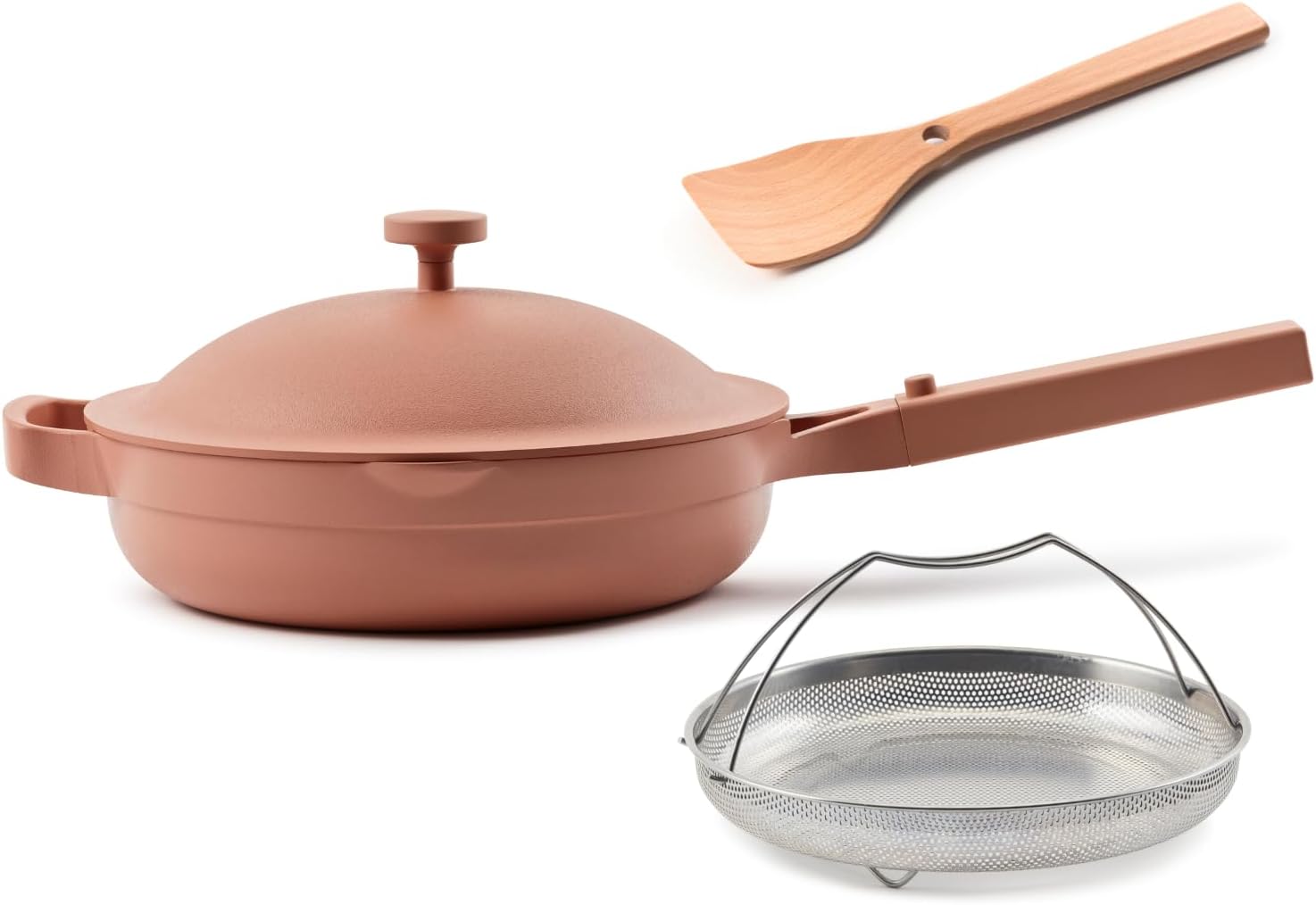
PFAS Status: No PFAS — ceramic-coated.
Coating: Proprietary ceramic nonstick
The Always Pan promised to replace eight pieces of cookware. Bold claim. The ceramic nonstick coating is free of PTFE and all PFAS compounds. Our Place has since added the Perfect Pot with the same coating. At $150 for the Always Pan 2.0, the price sits at the premium end of ceramic nonstick.
Real talk from reviewers: decent nonstick performance at first, but it fades somewhere between six months and a year of regular use. Most ceramic coatings have this issue—it’s not just Our Place. Best for: Small kitchens or minimalists who want one versatile, PFAS-free pan.